
inflatable slides >>China Manufacturers,Wholesale Factory
      Buy Inflatable At www.inflatable-wholesaler.com

Archive for the ‘amusement equipment’ Category

Applications of Artificial Grasses

Thursday, June 10th, 2010

Baseball
Artificial turf ,also named as artificial grasses, was first used in Major League Baseball in the Houston Astrodome in 1966, replacing the grass field used when the stadium opened a year earlier. It was later installed in other new “cookie-cutter” stadiums such as Pittsburgh’s Three Rivers Stadium, Philadelphia’s Veterans Stadium, and Cincinnati’s Riverfront Stadium. Early AstroTurf baseball fields used the traditional all-dirt path, but in the early 1970s, teams began using the “base cutout” layout on the diamond, with the only dirt being on the pitcher’s mound, batter’s circle, and around the bases. The biggest difference in play on AstroTurf was that the ball bounced higher on AstroTurf than on real grass.
In 2000, St. Petersburg’s Tropicana Field became the first MLB field to use a softer artificial surface, FieldTurf. All other remaining artificial turf stadiums were either converted to FieldTurf or were replaced entirely by new natural grass stadiums. With the replacement of Minneapolis’s Hubert H. Humphrey Metrodome by Target Field in 2010, only two MLB stadiums are still using Artificial turf: Toronto’s Rogers Centre (which converted to a next generation AstroTurf in 2010) and Tropicana Field.

American football
In 1969, Franklin Field — the football stadium of the University of Pennsylvania, Philadelphia, Pennsylvania — switched from grass to artificial turf. Also home of the Philadelphia Eagles, it was the first National Football League stadium to use artificial turf.

In 2006, Gillette Stadium - the football stadium of the New England Patriots and the New England Revolution switched from grass to FieldTurf due to the conflict of poor weather and hosting many sporting and musical events at the stadium. It is one of 13 National Football League stadiums that have turf instead of grass fields.

Field hockey
The introduction of synthetic surfaces has significantly changed the sport of field hockey. Since being introduced in the 1970s, competitions in western countries are now mostly played on artificial surfaces. This has increased the speed of the game considerably, and changed the shape of hockey sticks to allow for different techniques, such as reverse stick trapping and hitting. Due to the cost of synthetic field installation, India and Pakistan have lost their once dominant position in international competition.

Field hockey artificial turf differs from soccer and football artificial turf in the way that it does not try to reproduce a grass ‘feel’, being made of shorter fibres similar to the ones used on Dunfermline’s field. This shorter fibre structure allows the improvement in speed brought by earlier artificial turfs to be retained. This development in the game is however problematic for many local communities who often cannot afford to build two artificial fields: one for field hockey and one for other sports. The FIH and manufacturers are driving research in order to produce new fields that will be suitable for a variety of sports.

Types of Free Climbing

Friday, May 14th, 2010

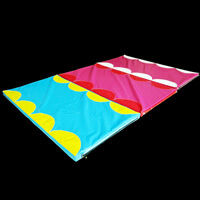
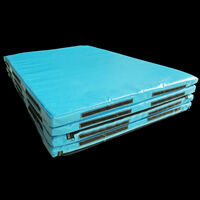
Bouldering may be described as climbing short, severe routes on boulders or small outcrops. While safety ropes from above are occasionally used, most boulderers feel that the most ethical form of protection is a bouldering mat or pad similar to those used by gymnasts. In addition, other climbers standing on the ground may “spot” the boulderer, to help safely guide his or her fall. Since the climber moves without aid of equipment it is a form of free climbing but the distinction is generally unimportant.

Free solo climbing: Usually describes free climbing without a rope or other protective gear. Free solo climbing is distinguished from solo climbing where a climber progressing alone uses a rope and protection devices including a self belay system.

Traditional climbing, or “Trad” Climbing. In Trad Climbing, the leader uses mostly removable gear (and the occasional bolt placed on lead) to protect against falls. As with all partnered climbing involving belays the climbing team (a leader and follower, or multiple followers) begins at the bottom of a climb and ascends to the top, the leader placing protective devices in the rock as he/she climbs. Once the leader is finished climbing, he/she establishes a belay. The follower then “follows” the route and removes all of the gear placed by the leader. It is important that the leader be proficient at placing Trad (or clean or natural) gear (cams, stoppers, hexes, tri-cams, etc.) because his/her safety depends upon the soundness of each individual gear placement. Placing trad gear on lead can be time-consuming and thus tiring, sometimes making routes feel harder than their rating. Trad climbing is generally practiced according to ethical principles, that dictate primarily natural gear placements be made. However, when “traditional” was first coined in U.S. climbing literature, traditionalists of the day hand drilled bolts sometimes from delicate stances on lead when cams, stoppers, etc. were not possible to place. Some of the resulting traditional routes have long run outs between bolts, requiring a “bold” mentality. More important to the original traditionalists than bolting or not was the overall approach to climbing: no resting on the rope after falls, instead lowering to a stance or pitch beginning or even the ground for restart; no placing of protection from a top rope or rehearsing difficult moves over and over; and no fixing of ropes to high points (sieging) to return with aid for repeated tries. It is, with perhaps the exception of climbing with no rope and prior knowledge of a route Free-soloing, the purest form of climbing. Since the term traditional first emerged in U.S. climbing literature, its use has changed. Some, for example, now will call a climbing style “trad” only if no bolts are encountered, and may relax the old restraint of lowering off tension for restarts after a fall.

Simul climbing is a style where climbers “move together”, a risky but speedy technique. Both leader and second move at the same time without stopping to belay. The leader - approximately a rope length above the second - usually places multiple pieces of protection as he climbs so that the weight of the second climber might arrest a possible leader’s fall. Should the second climber fall, however, the leader may be pulled from his holds, with potentially dangerous results.

Sport climbing is a type of freeclimbing which involves the use of pre-placed permanent bolts for protection. This frees the leader from the need to carry and place traditional gear. The leader merely clips one side of a quickdraw (two carabiners connected by a loop of webbing) into a bolt and the other into the rope. A typical sport route will require the leader to carry between 6 and 12 quickdraws or “draws,” one for each bolt in the string of bolts that protect the route. Sport Climbing, in essence, is focused more on the gymnastic aspects of climbing than the aesthetics or adventure. Sport routes are bolted with safety in mind and also because they generally (though not always) ascend faces that are not protectable by any other practical mean. Bolts, however, are not foolproof. The same stringence concerning safety found in Trad. climbing should apply to Sport climbing as well. In the case of a fall, sport climbers often rest on the rope and begin from where they are hanging, called “hang-dogging.” Hard sport climbs often require that the climber literally rehearse every single move several times before he/she can complete a clean ascent (without falls).

Top roping involves suspending a rope from an anchor located at the top of a short climb. The climber ties into one end of the rope and is belayed by his belayer who manages the other end of the rope. The belayer can belay either from the top or base of the route. Its questionable to call top roping a style of climbing. Top roping is included as a style since most free climbing implies segments of lead climbing where the climber is not safeguarded by a rope attached to an anchor situated at the top of the route.

Street Furniture—Bench

Thursday, May 13th, 2010

A bench is a piece of furniture, on which several people may sit at the same time. Benches are typically made of wood, but may also be made of metal, stone, or synthetic materials. Many benches have arm and back rests; some have no back rest and can be sat on from either side. In public areas, benches are often donated by persons or associations, which may then be indicated on it, e.g. by a small plaque.

Different types of benches

Often benches are simply named for the place they are used, regardless of whether this implies a specific design.

•    Park benches are set as seating places within public parks. They typically seat two to four people.
•    Garden benches are similar to public park benches, but are longer and offer more sitting places.
•    Picnic tables, or catering buffet tables have long benches as well as a table. These tables may have table legs which are collapsible, in order to expedite transport and storage.
•    Scenic benches are situated to provide a comfortable means of enjoying the contemplation of a beautiful landscape, a busy street scene, or perhaps a specific event.
Various types of benches are specifically designed for and/or named after specific uses, such as:
•    church pews inside places of worship are equipped with an additional kneeling bench.
•    a bench seat is a traditional seat installed in automobiles, featuring a continuous pad running the full width of the cabin.
•    a punishment bench is used to have a punishee lie (and often be tied) down on for the administration of a corporal punishment, after which it may be specifically named, e.g. caning bench
•    a bench (weight training) is used for fitness exercises, such as the bench press which is named after its use of a bench
•    a communion bench is not used as a seat
•    a piano bench offers usually one person seating and is height adjustable.
•    a spanking bench, such as a caning bench, is specifically designed for a spankee to lie upon, possibly strapped down, while submitting to paining of the posterior
•    Swing seats are independently movable, suspended benches, used for play or as a relaxing porch swing.
•    a courting bench (or kissing bench, or tête-à-tête): a two-seater with the seats pointing in opposite directions, thus almost facing each other.
•    a friendship bench in a school playground is where a child can go when they want someone to talk to.
•    the bench in a courtroom, behind which the judge is seated.

Spring Rides

Tuesday, May 4th, 2010

Have you ever played spring rides?

Whenever spring rides are mentioned, I immediately picture a classic spring mounted Victorian horse, but toy spring rides have been for much long, dating back to the Egyptians. Now let us have a glance at the history and the development of the spring rides.

Spring rides, also traditionally named rocking horse, developed from a kind of toy horse. At the very beginning, it is not set on a spring.

c6-149-g

The earliest English toszy horses were not rockers; they had a round barrel body and were mounted on four wheels. If the child’s legs reached the floor, they could propel themselves along. The children would mimic the jousting contests held during medieval times. Simple hobbyhorses, with stuffed heads mounted on a broomstick, were also popular for centuries. It was the archetype of modern spring rides.

The first actual spring ride, mounted on a bow shaped rocker, appeared during the seventeenth century. The earliest example is a crude elm and soft wood horse dated about 1610 and reputed to have belonged to Charles. This rare horse is now housed in the V & A Museum of Childhood in London. Over a period, bow shaped spring rides became more elaborate and realistic in appearance. Wealthy families would use these horses to train their children to ride.

spring rides became very popular during the 19c when Queen Victoria was very taken by a grey dappled horse manufactured J. Collinson of Liverpool in 1851, fuelling the desire of many middle class families to own one. This is the design that most people remind when they think of spring rides.

Although Europe led the way in the development of the spring rides, it was an American, J.P.Marqua, who, in 1871 invented a safety stand with the horse suspended on a static frame with swing irons. European manufacturers were quick to recognize the advantages of this design. It removed the danger of the horse tipping over fingers and toes.

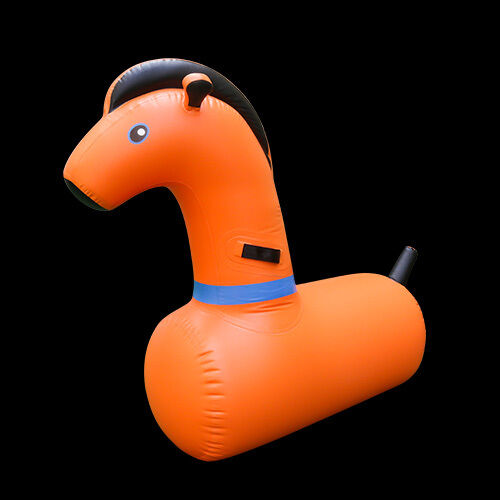
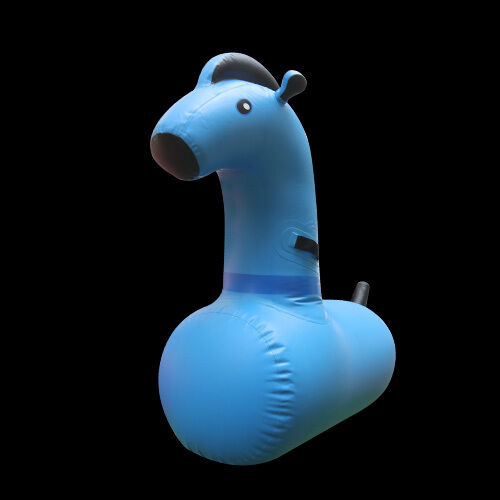
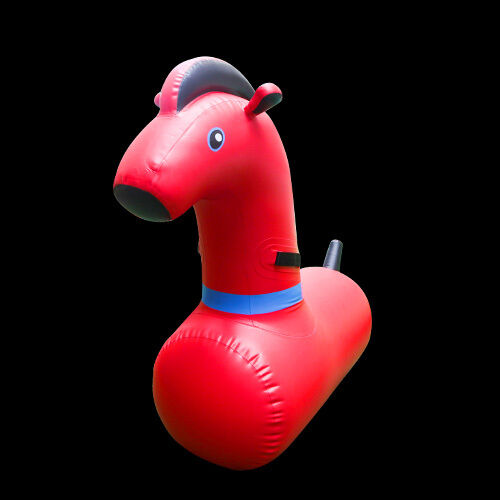
With the advent of modern technology, it became possible to produce beautifully carved and highly polished horses. What’s more, spring rides do not only have the single appearance as horse any more. There are a variety of styles, colors and forms. Such as purple plane spring rides, fish spring rides, green littlie bird spring rides, green-bear spring rides, lovely cartoon spring rides, jingle cat spring rides, flying motor spring rides, small truck spring rides, green-sheep spring rides, tiger spring rides, four seats spring rides, and so on. In a word, different animal shape spring rides, color spring rides, bus spring rides, bouts spring rides, plane spring rides, take you different feeling for your recreation.

Enjoy your rocking world with your spring rides!

Playground Mats

Wednesday, April 28th, 2010

It is certain that most people love doing sports. And sports is extremely significant to us, as the saying goes “life goes with sport.” However, is there anybody like running on the traditional playground? Traditional playground is usually made from sand and dust. It is soft definitely; however, can you imagine the condition of blowing strong wind? With large quality of sand and dust flying in the air, you seems just go through a dust storm. You even cannot open you eyes, let alone doing exercise on the playground.

Fortunately, this phenomenon will never happen again in the future, for the widely use of playground mats. Playground mats are those mats designed for playground and doing sports. There are also many kinds and styles of playground mats, such as beautiful sunrise playground mats, basketball playground mats, sports field playground mats, park playground mats, cartoon drawing playground mats, cartoon picture playground mats, outdoor runway playground mats, outdoor kids playground mats, space sky playground mats, kindergarten safety playground mats, garden three runway playground mats, PU mixed type runway playground mats and so on. Different kinds of playground mats may have different features according to their usage and in order to cater to different customs. Sport playground mats may be more professional and durable, for the large use frequency by the player, while playground mats used in kindergartens may be lovely, colorful, safe and have attractive appearances, for their aims are to make children play happily and safely.

Besides, do you like having a picnic in spring or autumn? Do you still take volumes of slim papers for your seating? Nowadays, there is a kind of playground mats, which are waterproof and soft. Waterproof picnic playground mats are simply that: playground mats that provide 100% protection from damp or wet and will provide you with long-lasting comfort. These playground mats are basically constructed with two separate sides. The top side of the playground mats, typically made of acrylic, polyester fleece, or a soft cotton fabric, companied with a back side made from a rugged waterproof material like nylon. The playground mats’ linings are filled with polyester batting or foam padding to ensure a pillow-like cushion for hours of comfort. And being machine washable, it makes it very easy to keep these playground mats clean and ready for future use. With a variety of styles and sizes, there are waterproof picnic playground mats to suit any tastes. Not only will you enjoy unparalleled comfort and performance, you can also keep the water, dirt away from you. If you are planning a picnic or any other outdoor activities, make sure to include a waterproof picnic playground mats on your list and then prepare to enjoy your lovely picnic.

If you love sports, if you have a backyard, if you want your backyard to be a professional stadium, do not forget the various playground mats. They will make your exercise more safe and easy.

Electronic Cars

Saturday, April 24th, 2010

If you still worry about what birthday gifts your kids like? Do not worry that, Today I can help you to solve the disturbing problem. I would like to recommend a toy to you.

Do you remember the time you drive in the electronic cars? Do you still always bring back the good old days? It is a memorable recall to you. Yes, today I would like to introduce the electronic cars to you. Make you and your kids have a good swim in children’s simplicity time. You can share the old good days with your kids. Tell them about your story, your growing fun. Thus increase communication between you and your kids.

Today the electronic cars are different in your time. Maybe at your time, it is simplex. We can not find different one. But nowadays, depending on the fast development of production technique, we can design all kinds of electronic cars. There are three kinds of electric cars, the battery cars, bumper cars and electric trains. These electronic cars are designed completely according to the children’s interest and psychological. Moreover, designers adopt the newest and latest technology to design the up-to-date style. It is bright color, non-fading, solid and reliable. Meanwhile, many cars are designed and manufactured based on the customer’s needs. And the electronic cars are mix the light, music, timing, automatic control, all the design are suitable for the player. So it has variable shapes and style. If you want your electronic cars unique, you can tell the designers about your demand. Are you interested on it? I introduce a company to you. Y&G is leading of electric car vehicle in China, specializing in both designing and manufacturing. You can take it easy. All the products of Y&G are passed the ISO9001 international quality management system certification by the china pacific insurance company limited coverage.

If you still hesitate, worry about the price. Of course it is natural. As the design of electronic cars according to our needs, whether the price will high? I can be sure to tell you, the price is very reasonable. Because Y&G goal is top quality, best creativity, best after-sales service and best price.

So in order to give your child a unique birthday gift, you can receive my suggestion. I believe that it will be loved by your kids. Electronic cars are a world for children and the adults, they can taste the exciting.